Business Electronics Buying and Recycling
We buy eligible reusable computers, servers, networking equipment, and spare components while recycling obsolete electronics. Shared ownership groups can remain identifiable within the equipment review, and ITAD can address the services your organization requests around the retirement. Complete systems and tested parts receive consideration before they are reduced to general board material.
Use a simple ownership field alongside model, quantity, condition, and location. Preserve that distinction when several teams combine equipment for a single collection request. Loose motherboards, RAM, CPUs, and power supplies should also have an approved owner, even when they lack individual asset tags. This creates a practical inventory that supports a combined pickup without erasing the release decisions each team needs to make.
Keep Different Equipment Streams Visible
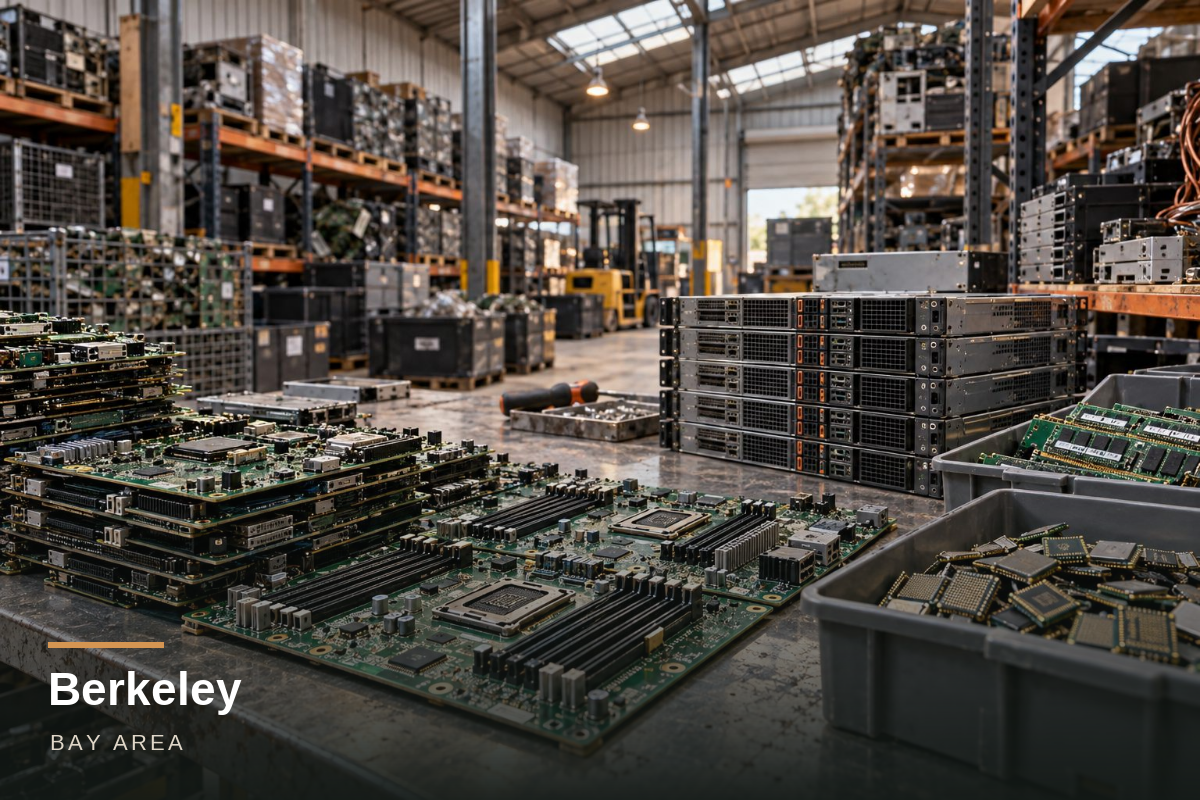
A shared workroom may contain a reusable server, older computers, tested spare parts, and mixed circuit boards. Give the server a configuration-level description while listing complete computers by model and condition. Separate unused or tested components from failed and untested material so the review does not assume one status for everything.
Group board material by recognizable category, including motherboards, server boards, telecom cards, networking cards, and hard drive boards where present. Identify UPS equipment independently and disclose battery status. Ask how any offer is allocated across ownership groups and what service charges apply to the collection. A clear proposal lets the participating teams understand the equipment value and handling scope before approving a shared release.
Shared Equipment, Reusable Assets and ITAD
Shared equipment can be reviewed as one approved retirement while preserving ownership groups and the distinction between complete systems and components. We consider reusable assets for purchase, recycle obsolete electronics, and define ITAD services when the organization requests a broader scope.
Describe which teams will stage equipment and which locations still need internal collection. Include room access, loading arrangements, and any requested asset records in the quote. At handoff, use the approved combined list with ownership labels intact and identify who can address exceptions. This gives a multi-team project one workable collection plan while preserving the internal distinctions that matter for release and reconciliation.
Server Buyback & Electronics Recycling
Working servers and reusable data center equipment can be reviewed for surplus buyback. Retired computers, motherboard lots, circuit boards, power supplies and UPS equipment can be included in a recycling request. Keep reusable assets intact until the lot is evaluated.
We come to your Berkeley site by arrangement. Send photos, quantities, condition and access details. Cash offers apply to qualifying equipment; pickup charges, payment terms and acceptance are confirmed for your lot. Contact our team for service at your business location.
Preparing Equipment For Sale Or Recycling
- Assign an owner to each shared equipment group.
- Hold donated assets until release rights are checked.
- Separate project-owned hardware from general inventory.
- Keep ownership labels attached through handoff.
Berkeley Recycling & Buying Questions
Can shared equipment be quoted as one lot?
Yes, identify the owners and the person authorized to coordinate the request. Resolve release authority and allocation of any payment before collection.
What should we do with equipment whose owner is unclear?
Keep it outside the released inventory until ownership is resolved. A quote request is not a substitute for authorization to sell or recycle an asset.
Can equipment from several internal teams receive one review?
Yes. A combined request can cover approved computers, servers, network hardware, and component groups while preserving the owner or team associated with each. Provide models, current configuration, condition, and quantities so reusable assets receive an equipment assessment rather than a generic scrap value. The offer can discuss the combined lot and any required distinctions. Unresolved ownership should remain outside the confirmed sale until the organization determines which assets it can release.
Do you buy shared servers and spare components?
Owned servers and identifiable spare parts can be submitted when the organization has approved their release. Include processors, RAM, storage, power supplies, network options, and accessories for complete systems, and part numbers or categories for loose components. Keep tested, failed, and untested material distinct. This allows the review to consider reuse and recycling together without assuming every item in a shared workroom is available for sale or has the same condition.
Can donated computers be included in an electronics retirement?
They can be reviewed once the organization confirms it has the right to release them under the applicable ownership arrangement. Keep that decision separate from the equipment’s technical condition. For approved computers, provide current models, configurations, missing parts, and known faults. Reusable systems can be considered for purchase while older components are reviewed for recycling. The equipment offer should cover the assets actually available rather than relying only on their presence in a shared room.
How are mixed board and memory lots considered?
Motherboards, server boards, telecom cards, network cards, RAM, CPUs, and ordinary power supplies can be described as recognizable categories with representative photos and quantities. Tested spare components should remain separate from failed or untested material so potential reuse is visible. Gold-bearing features do not determine a uniform payout. We review the offered lot and explain its equipment or material treatment without requiring the business to assign a speculative grade to every component.
How Are Laptop Recycling And Laptop Buyback Different?
Laptop buyback evaluates a complete notebook for continued use, considering its model, specifications, condition and quantity. Laptop recycling addresses equipment or parts at the end of their useful life. Send working, untested and damaged machines in the same inventory but identify their condition. Include docks and chargers where available, and describe damaged batteries before collection. Account locks and data requirements should be resolved under the agreed retirement plan.
What Should An APC Pickup Request Include?
Send the APC model number, the number of UPS units and whether their batteries are installed, missing or stored separately. Include external battery packs and replacement cartridges in the description. Tell us about damaged batteries and any hardwired equipment. These details let us review battery backup recycling, reuse value and the equipment needed for removal. Electrical disconnection and battery handling are confirmed before collection.
Can Hard Drives Stay In Servers Sent For Recycling?
Tell us whether the servers contain hard drives, SSDs or other storage media. Equipment can be reviewed with the drives installed, but you must agree on the data-handling scope before releasing it. Some customers retain their media; others require a particular sanitization or destruction process and documentation. A server recycling or buyback quote does not automatically establish that data service.
Which Parts Can Be Sold With Surplus Servers?
List matching rails, drive caddies, RAID controllers, network cards, memory, processors and spare power supplies with the server inventory. Also identify storage enclosures, switches and unused enterprise spares that are available. These items can be reviewed with the complete systems, while recycling material receives its own assessment. Exact part numbers and known condition make the offer more useful than an estimate based only on total rack count.