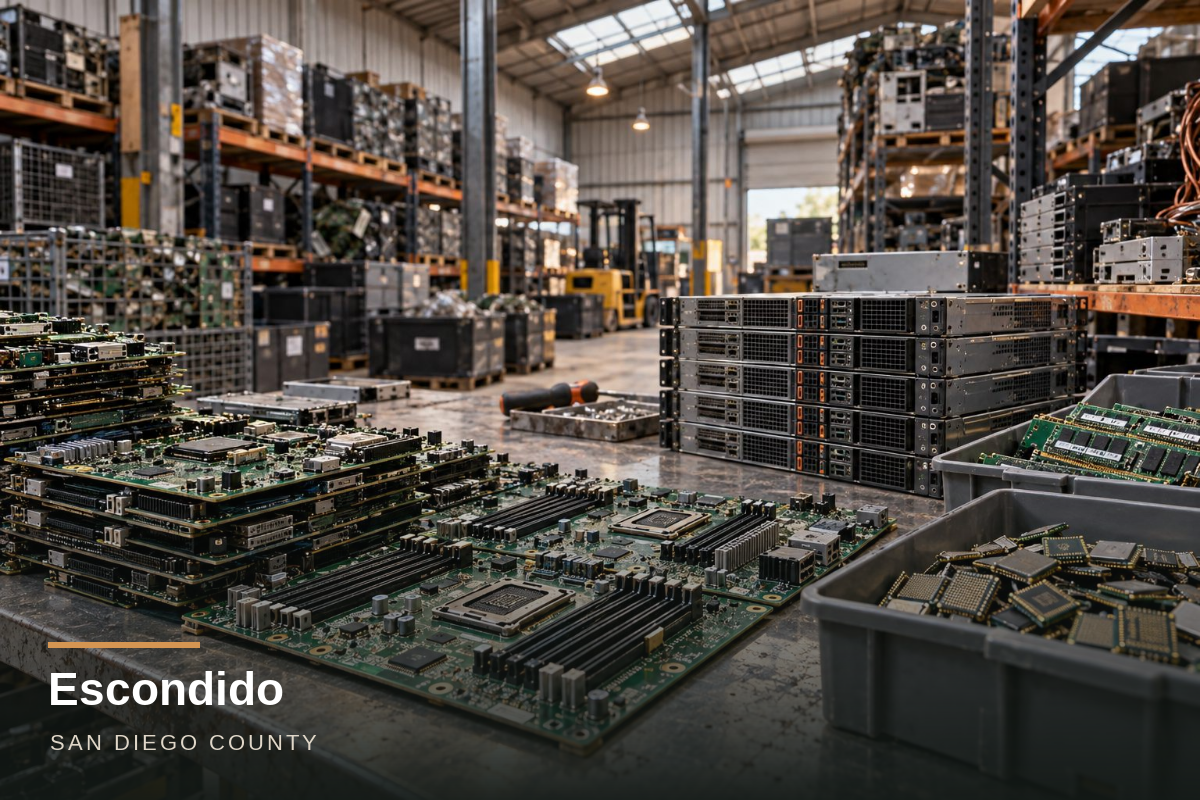
Computer Tower Buying and Component Recycling
We review complete towers, incomplete computers, and loose components according to their current condition and reuse opportunity. Motherboards, RAM, CPUs, cards, and power supplies can be considered alongside the systems they once supported. ITAD services can address the wider asset retirement while eligible reusable equipment remains a purchase opportunity rather than automatically becoming scrap.
Record whether the computers are tested, known-failed, or untested. Keep matching adapters and accessories identifiable when they are included. If your team will retain components before release, update the outgoing inventory after that work. These details help the review distinguish possible reusable computers from incomplete hardware and keep any offer tied to the actual systems available for collection.
List Loose Components Without Mixing Their Condition
Motherboards removed during upgrades belong on a different inventory line from complete towers. Add separate groups for RAM, CPUs, expansion cards, power supplies, and other identifiable parts. Preserve tested or failed labels where they exist, and describe uncertain condition honestly rather than assigning the same status to the entire parts box.
Protect exposed boards from heavy cases and loose metal during staging. Gold-bearing connectors can be described as part of the material, but board type and overall composition still need review. Provide quantities, representative photos, and part numbers where available. A component-level view helps explain whether particular material is considered for reuse or recycling and how it contributes to any offer for the combined lot.
Desktop Systems, Spare Parts and ITAD
We buy eligible complete computers and review incomplete towers, motherboards, RAM, CPUs, and power supplies according to their actual configuration and condition. ITAD can accompany the hardware retirement while retained components remain outside the equipment offered for purchase.
Describe where the towers are stored and how they will reach the loading area. If they remain at desks or on shelves, include that internal handling in the request. State what your staff will stage and who approves the final equipment count. Matching the data list, configuration list, and physical load helps the pickup proceed against a clear scope instead of several conflicting versions of the same retirement project.
Server Buyback & Electronics Recycling
Working servers and reusable data center equipment can be reviewed for surplus buyback. Retired computers, motherboard lots, circuit boards, power supplies and UPS equipment can be included in a recycling request. Keep reusable assets intact until the lot is evaluated.
We come to your Escondido site by arrangement. Send photos, quantities, condition and access details. Cash offers apply to qualifying equipment; pickup charges, payment terms and acceptance are confirmed for your lot. Contact our team for service at your business location.
Preparing Equipment For Sale Or Recycling
- Group identical models only when configurations match.
- Record missing memory or power supplies.
- Box loose boards apart from heavy computer cases.
- Retain a separate list of removed storage media.
Escondido Recycling & Buying Questions
Do incomplete tower computers have to be dismantled?
No. Describe them as incomplete and list known missing parts. The equipment can be reviewed in its current condition before a disposition plan is agreed.
Can we use a spreadsheet instead of individual photos?
A model-and-count spreadsheet is helpful, especially for repeated configurations. Add representative photos and condition details so the review has both inventory and visual context.
Are identical-looking towers always valued the same way?
No. Matching cases or model names can contain different processors, memory, storage, power supplies, or missing parts. Describe the current configuration and identify exceptions within a group of similar computers. Tested, failed, and untested equipment should remain distinguishable as well. We review the actual outgoing systems, so an accurate model-and-configuration list gives the purchase assessment a better basis than a single photo or the original specification for the fleet.
Do you buy desktop CPUs and memory removed during upgrades?
Identifiable CPUs and RAM can be submitted separately from the computers, with part numbers, quantities, and known condition. Keep tested reusable components apart from failed or untested material, and preserve useful labels or packaging. They can be reviewed alongside motherboards, expansion cards, and power supplies without treating every component alike. The offer depends on the actual parts and category, so retaining components does not prevent the remaining computers from receiving their own review.
Can mixed-brand computers be included in one request?
Yes. Dell, HP, Lenovo, and other identifiable computer systems can be reviewed together when their models, current configurations, condition, and included accessories are clear. Brand alone does not establish a purchase offer. Separate complete systems from empty or incomplete chassis, and identify any servers, UPS backups, or loose boards in the same project. This lets the review distinguish reusable equipment from recycling material without requiring every computer to match.
What is the difference between motherboard recycling and computer buyback?
Motherboard recycling evaluates the identifiable board material, while computer buyback considers a usable or potentially reusable complete system and its current configuration. A tower may include processors, memory, drives, power supplies, and accessories that affect its equipment review. Keep complete systems intact for discussion where practical, and describe loose boards separately. The proposal can then address both categories without assuming a computer’s best option is always to dismantle it into components.
How Are Laptop Recycling And Laptop Buyback Different?
Laptop buyback evaluates a complete notebook for continued use, considering its model, specifications, condition and quantity. Laptop recycling addresses equipment or parts at the end of their useful life. Send working, untested and damaged machines in the same inventory but identify their condition. Include docks and chargers where available, and describe damaged batteries before collection. Account locks and data requirements should be resolved under the agreed retirement plan.
What Should An APC Pickup Request Include?
Send the APC model number, the number of UPS units and whether their batteries are installed, missing or stored separately. Include external battery packs and replacement cartridges in the description. Tell us about damaged batteries and any hardwired equipment. These details let us review battery backup recycling, reuse value and the equipment needed for removal. Electrical disconnection and battery handling are confirmed before collection.
Can Hard Drives Stay In Servers Sent For Recycling?
Tell us whether the servers contain hard drives, SSDs or other storage media. Equipment can be reviewed with the drives installed, but you must agree on the data-handling scope before releasing it. Some customers retain their media; others require a particular sanitization or destruction process and documentation. A server recycling or buyback quote does not automatically establish that data service.
Which Parts Can Be Sold With Surplus Servers?
List matching rails, drive caddies, RAID controllers, network cards, memory, processors and spare power supplies with the server inventory. Also identify storage enclosures, switches and unused enterprise spares that are available. These items can be reviewed with the complete systems, while recycling material receives its own assessment. Exact part numbers and known condition make the offer more useful than an estimate based only on total rack count.