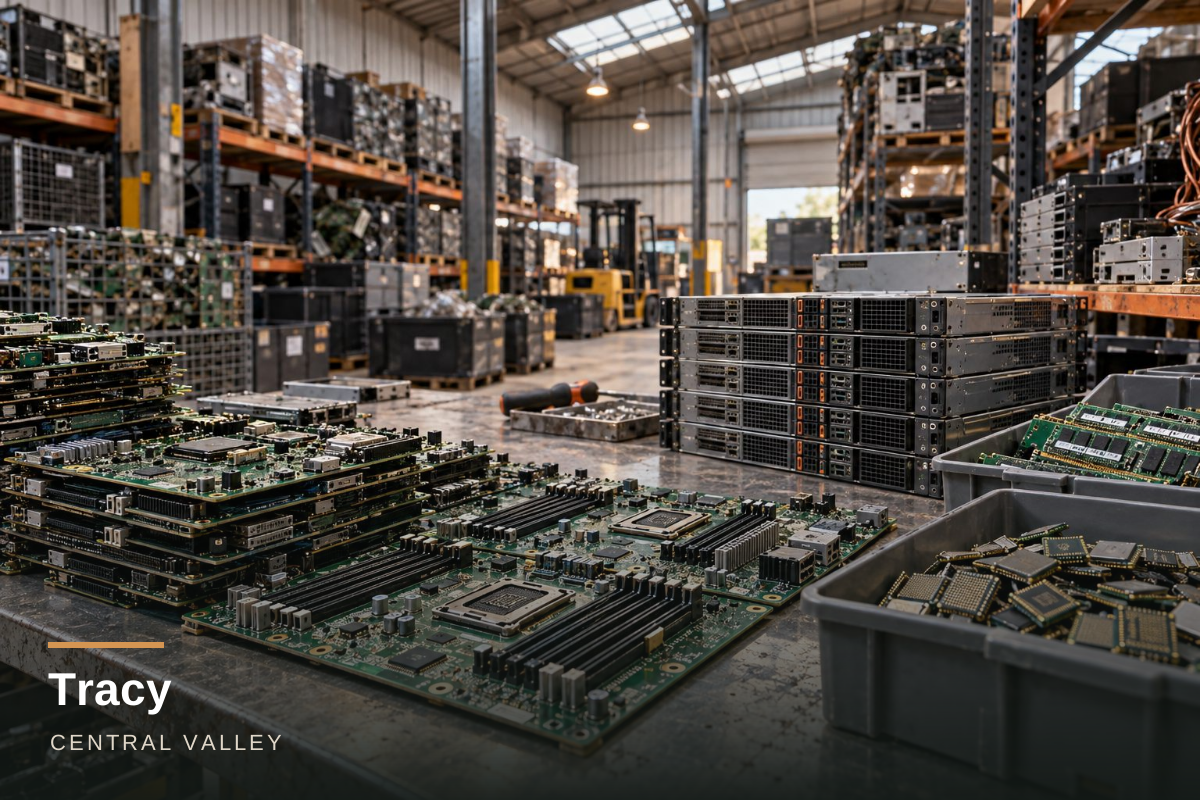
Business IT Equipment Buying and Recycling
We review combined business inventories while keeping the different hardware categories visible. Complete computers, servers, switches, and reusable spare components can receive purchase consideration; outdated boards and other electronic material can be recycled. ITAD and decommissioning can support the wider retirement without losing the distinctions between equipment origin, current condition, and intended disposition.
Preserve origin labels if your asset records or internal payment allocation require them. Count computers, servers, network hardware, UPS backups, and component containers separately at the final site. This prevents equipment still in transit from becoming part of a confirmed pickup quantity and gives the reviewer one accurate description of the lot available at the address where collection will actually take place.
Evaluate the Consolidated Lot Without Hiding Differences
Group matching systems across locations only when their current configurations and condition match. Record server CPUs, RAM, storage, power supplies, rails, and known faults, then identify exceptions. Keep complete reusable equipment distinct from loose motherboards, telecom cards, network boards, hard drive boards, and ordinary power supplies.
If spare parts arrive in mixed containers, preserve tested or failed labels and identify recognizable categories before quote review. Ask how the purchase amount and service charges apply to the consolidated inventory, including any allocation by origin. Confirm whether the offer is preliminary and how inspection or count differences affect it. A combined pickup can simplify logistics while still retaining the equipment-level distinctions needed for a meaningful value review.
Consolidated Assets and Reusable Equipment
Consolidated assets can retain their equipment identity even when they come from different company locations. We review reusable systems and components by current condition and configuration, while ITAD and decommissioning can be defined around the broader approved retirement.
At the final site, describe the loading entrance, pallet or container counts, handling equipment, and any internal movement still required. Resolve data decisions and release authority before transferred assets join the approved lot. Choose a cutoff for the confirmed inventory and update significant changes before pickup. This gives the collection team a defined location and scope while preserving a clear record of the assets gathered from different parts of the business.
Server Buyback & Electronics Recycling
Working servers and reusable data center equipment can be reviewed for surplus buyback. Retired computers, motherboard lots, circuit boards, power supplies and UPS equipment can be included in a recycling request. Keep reusable assets intact until the lot is evaluated.
We come to your Tracy site by arrangement. Send photos, quantities, condition and access details. Cash offers apply to qualifying equipment; pickup charges, payment terms and acceptance are confirmed for your lot. Contact our team for service at your business location.
Preparing Equipment For Sale Or Recycling
- Track arrivals against each location’s transfer list.
- Keep origin labels when internal records require them.
- Confirm the exact address of the final staging point.
- Exclude equipment still in transit from confirmed counts.
Tracy Recycling & Buying Questions
Can equipment from several sites be combined?
Yes, describe the consolidated lot and confirm ownership. State whether you will handle internal transfers or are requesting separate collection work.
Can the pickup quote include multiple addresses?
Provide each address, inventory, access details, and timing needs. Multiple stops must be explicitly included and priced in the agreed scope.
Can equipment from several business locations be bought as one lot?
Yes. A consolidated lot can be reviewed when the actual received equipment is described clearly by model, configuration, condition, and category. Keep origin or ownership groups identified where they matter to your organization. Complete reusable systems and component material should remain distinguishable. The offer can discuss the combined assets without assuming expected transfers are already present or assigning the same value to different equipment simply because it has been brought to one location.
Do matching models from different offices receive the same review?
Matching model names are useful, but the current configurations and condition may differ. Identify processors, RAM, storage, missing accessories, and known faults, and note exceptions within similar-looking computer or server groups. Equipment reused or upgraded at different offices may no longer match its original specification. We review the actual outgoing hardware, allowing the offer to reflect real differences rather than treating a model count as proof that every system is complete and equivalent.
Can networking spares and circuit boards join the consolidated sale?
Yes. Switches, network modules, telecom cards, RAM, CPUs, motherboards, server boards, and power supplies can be included as identifiable groups. Keep tested spares separate from failed or untested material, and preserve part numbers where available. Reusable complete devices and recycling components are assessed differently. The combined offer can then address the actual hardware and material without obscuring useful parts inside an undifferentiated inventory of electronics from several sites.
Can ITAD support a consolidated retirement across departments?
Yes. ITAD can address the data-related requirements and agreed records for approved computers, servers, storage, and network assets within the consolidated project. Reusable systems can be considered for purchase while older components are reviewed for recycling. Describe the equipment actually available and the media your organization retains. The scope should connect those assets to the requested services instead of assuming that consolidation or a combined hardware sale automatically supplies every department’s reporting needs.
How Are Laptop Recycling And Laptop Buyback Different?
Laptop buyback evaluates a complete notebook for continued use, considering its model, specifications, condition and quantity. Laptop recycling addresses equipment or parts at the end of their useful life. Send working, untested and damaged machines in the same inventory but identify their condition. Include docks and chargers where available, and describe damaged batteries before collection. Account locks and data requirements should be resolved under the agreed retirement plan.
What Should An APC Pickup Request Include?
Send the APC model number, the number of UPS units and whether their batteries are installed, missing or stored separately. Include external battery packs and replacement cartridges in the description. Tell us about damaged batteries and any hardwired equipment. These details let us review battery backup recycling, reuse value and the equipment needed for removal. Electrical disconnection and battery handling are confirmed before collection.
Can Hard Drives Stay In Servers Sent For Recycling?
Tell us whether the servers contain hard drives, SSDs or other storage media. Equipment can be reviewed with the drives installed, but you must agree on the data-handling scope before releasing it. Some customers retain their media; others require a particular sanitization or destruction process and documentation. A server recycling or buyback quote does not automatically establish that data service.
Which Parts Can Be Sold With Surplus Servers?
List matching rails, drive caddies, RAID controllers, network cards, memory, processors and spare power supplies with the server inventory. Also identify storage enclosures, switches and unused enterprise spares that are available. These items can be reviewed with the complete systems, while recycling material receives its own assessment. Exact part numbers and known condition make the offer more useful than an estimate based only on total rack count.