Workstation Buying and Electronics Recycling
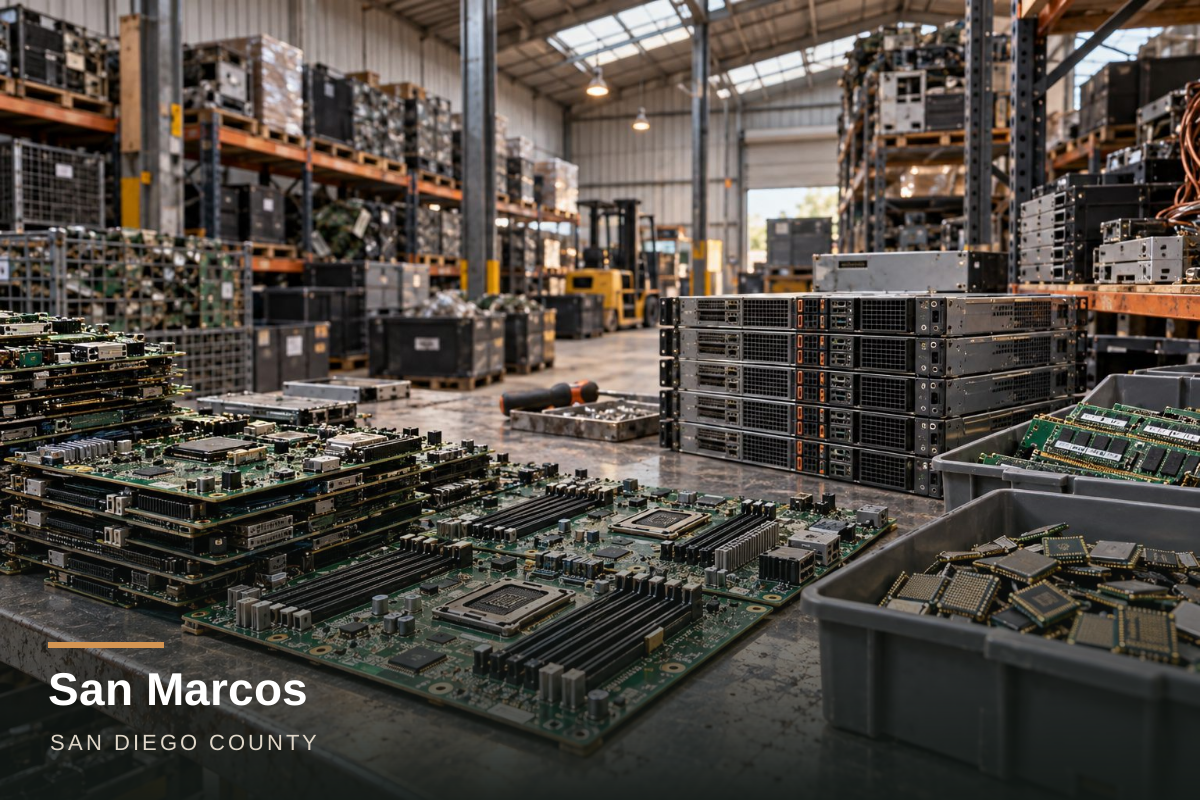
We review complete workstations and their matching accessories alongside loose components and older equipment. Reusable towers, compact systems, servers, RAM, CPUs, and spare parts can receive purchase consideration, while obsolete boards and power supplies can be discussed for recycling. ITAD connects those equipment choices to the broader retirement when data-related work is requested.
Count small-form-factor systems separately from towers and list loose boards or spare components on their own lines. Record condition and any parts your organization will retain. This gives the reuse review a clear picture of each equipment group and helps the move from desk to staging area preserve useful information. Matching accessories can matter to a purchase assessment, but the actual model and condition remain central.
Record the Computer That Will Actually Leave
Describe the outgoing configuration after your internal upgrade work is complete. If drives, memory, graphics cards, or other parts are retained, remove them from the listed specification. Group repeated models only when the remaining configurations match, and identify untested or faulty systems separately from equipment whose operation has been confirmed.
Loose CPUs, RAM, motherboards, expansion cards, and power supplies can be reviewed alongside the computers when they are counted and recognizable. Keep tested spares distinct from mixed recycling material. Ask the quote to explain potential equipment value, any service charges, and inspection conditions for the defined lot. A current inventory prevents the offer from depending on parts that the business has already reassigned to active workstations.
Workstations, Accessories and Reusable Components
Workstation retirement can include reusable computers, matching accessories, servers, and loose upgrade parts in one review. We distinguish current equipment configurations from the original specification and can define ITAD services around the assets actually approved for release.
Identify data-bearing assets and complete the required release decisions before collection. Provide the loading route, elevator information, and the contact available during handoff. If your team consolidates equipment, use labels that preserve the computer and accessory groupings established at the desks. Confirm the final count after staging. This produces a practical pickup plan for the actual workspace rather than assuming every item is already prepared at the loading entrance.
Server Buyback & Electronics Recycling
Working servers and reusable data center equipment can be reviewed for surplus buyback. Retired computers, motherboard lots, circuit boards, power supplies and UPS equipment can be included in a recycling request. Keep reusable assets intact until the lot is evaluated.
We come to your San Marcos site by arrangement. Send photos, quantities, condition and access details. Cash offers apply to qualifying equipment; pickup charges, payment terms and acceptance are confirmed for your lot. Contact our team for service at your business location.
Preparing Equipment For Sale Or Recycling
- Match adapters by device label before staging.
- Mark accessories that stay with active workstations.
- State whether collection starts at desks or a staging area.
- Record small-form-factor computers separately from towers.
San Marcos Recycling & Buying Questions
Should adapters be included with reusable computers?
Identify matching adapters when available and authorized for release. Missing or incorrect accessories can affect a reuse assessment.
Can you collect directly from desks?
Describe the desk locations, preparation status, and requested labor. Internal collection and disconnection need to be included in the agreed scope.
Do you buy compact computers as well as full-size towers?
Both can be submitted for review with manufacturer, model, current configuration, condition, and included adapters or accessories. Compact systems and towers should be listed separately when their hardware differs. Note retained drives, missing RAM, or other changes from the original specification. We evaluate the actual reusable equipment alongside any recycling material, so the size of the case is not a substitute for a clear description of what is being sold.
Can missing adapters affect a workstation offer?
Missing or incorrect accessories can affect how the actual system is reviewed, especially when they are needed to use the equipment. Identify matching adapters and power supplies that are included, and disclose anything missing rather than assuming it accompanies the model. Complete reusable computers and loose spare accessories can receive separate consideration. This keeps the purchase terms tied to the available hardware instead of an idealized complete package your business is not offering.
What parts from a workstation refresh can be reviewed?
RAM, CPUs, motherboards, expansion cards, network cards, and ordinary power supplies can be described alongside the computers. Keep tested spares distinct from failed or untested material, and preserve part numbers where available. Complete systems should remain identifiable before dismantling is considered. The review can then distinguish component reuse from board recycling, with the offer reflecting the actual categories and condition rather than treating every part removed during an upgrade as equivalent scrap.
Can ITAD support a shared-workstation retirement?
Yes. ITAD can address the requested data-related work and records for approved computers and other information-bearing devices while reusable hardware receives a purchase review. Describe retained media and the current outgoing configurations so equipment value remains clear. The agreed scope should distinguish the hardware offer, recycling, and services rather than treating a workstation sale as automatic coverage for every retirement requirement. This keeps the project focused on the assets actually being released.
How Are Laptop Recycling And Laptop Buyback Different?
Laptop buyback evaluates a complete notebook for continued use, considering its model, specifications, condition and quantity. Laptop recycling addresses equipment or parts at the end of their useful life. Send working, untested and damaged machines in the same inventory but identify their condition. Include docks and chargers where available, and describe damaged batteries before collection. Account locks and data requirements should be resolved under the agreed retirement plan.
What Should An APC Pickup Request Include?
Send the APC model number, the number of UPS units and whether their batteries are installed, missing or stored separately. Include external battery packs and replacement cartridges in the description. Tell us about damaged batteries and any hardwired equipment. These details let us review battery backup recycling, reuse value and the equipment needed for removal. Electrical disconnection and battery handling are confirmed before collection.
Can Hard Drives Stay In Servers Sent For Recycling?
Tell us whether the servers contain hard drives, SSDs or other storage media. Equipment can be reviewed with the drives installed, but you must agree on the data-handling scope before releasing it. Some customers retain their media; others require a particular sanitization or destruction process and documentation. A server recycling or buyback quote does not automatically establish that data service.
Which Parts Can Be Sold With Surplus Servers?
List matching rails, drive caddies, RAID controllers, network cards, memory, processors and spare power supplies with the server inventory. Also identify storage enclosures, switches and unused enterprise spares that are available. These items can be reviewed with the complete systems, while recycling material receives its own assessment. Exact part numbers and known condition make the offer more useful than an estimate based only on total rack count.